











You can scrub every room in your home, but are those cleaning products safe for your family and the environment? How can you be sure?
This post will explain the two easiest ways to clean your home while caring for the environment and keeping your family healthy: choose the right pre-made cleaners or learn to make your own.
healthy Pre-Made Cleaners
Just because a product is labeled "natural" doesn't mean it is organic or safe to use. Use of catch phrases like "organic" or "natural" in cleaning products are not regulated as they are in food, and even then they can be used deceptively.
Add in the fact that there are plenty of chemicals that occur in nature that you do not want to be cleaning with; hello bleach and ammonia I'm looking at you.
What's a green consumer to do? Check the label. Some ingredients to look for:
- plant extracts and natural minerals
- essential oils
- enzymes (protease, amylase, lipase)
- baking soda
- white vinegar
- castile soap
- alcohol (ethanol or isopropyl)
- hydrogen peroxide and sodium percarbonate (oxygen bleach)
Some other safe cleaning ingredients found in green cleaners are coconut, minerals and salt.
Make your own cleaning products
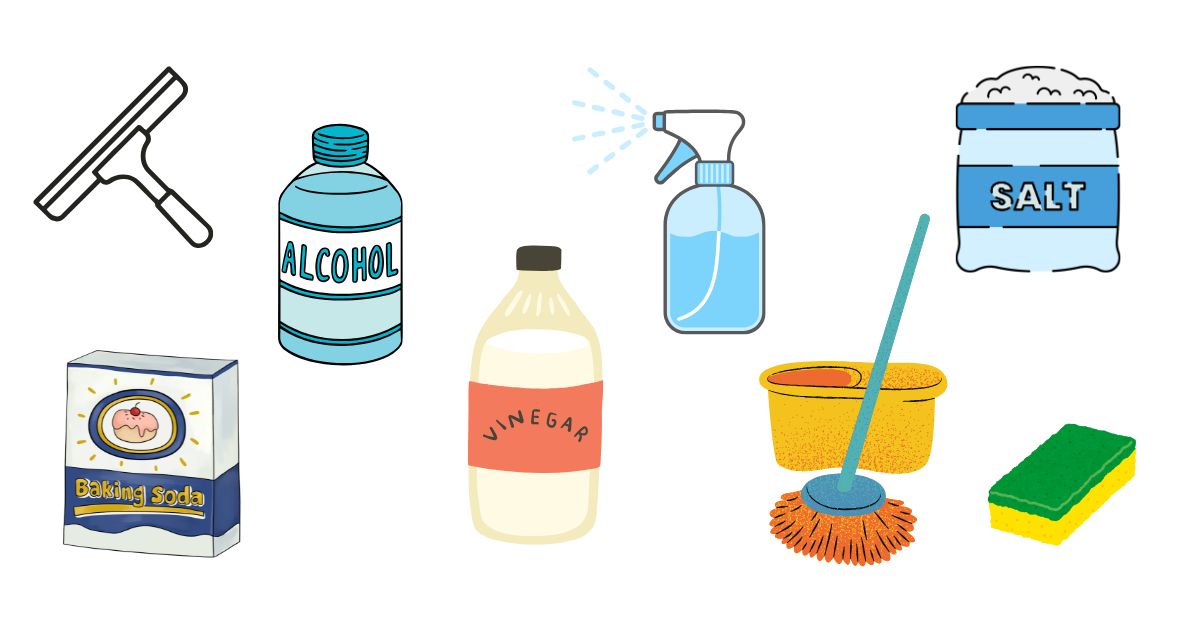
This is not an all inclusive list, just a few of my favorites that I use regularly in my own home. Not only are these safe, they clean just as well as chemical cleaners and best of all they are very low cost.
Single Ingredient Cleaners
Table salt is great as an abrasive and can also be used to dry up liquids spilled on carpets. I use little salt to scrub my cast iron skillets. A quick rinse, then heat it on the stove with a dab of oil to keep it perfectly seasoned.
Distilled White Vinegar can be used to kill mold, get rid of lime deposits and even take out stains left by tea and coffee in your cups. It's can be used to clean through grease, to get rid of stains and even as pest control. Ants will avoid white vinegar, so use it to clean around your window frames and any crevices.
Don't like the vinegar smell? Make Orange Peel Vinegar: put some orange (or lemon) peels in a glass jar, fill it with vinegar and let it sit for a few weeks. Strain the peels and it is ready to go. I mix it with an equal part of water in a spray bottle to clean my kitchen counters. Add a cup to a gallon of hot water for mopping floors.
Baking soda is often used as a refrigerator deodorizer, and once it is done there it can be used for scrubbing and to whiten stains. Or dump it in the garbage disposal, add a little vinegar and warm water while you run the disposal to get rid of funky odors.
A pumice stone may take a bit more elbow grease than harsh chemicals, but it can do wonders on stains in the toilet or bathroom sink.
Keep a small squeegee in the shower and wipe down glass doors before getting out of the shower to prevent water spots.
homemade cleaning mixes
Homemade Glass Cleaner:
In a spray bottle combine:
- 2 cups water
- ½ cup distilled white vinegar
- ¼ cup rubbing alcohol
While you are being environmentally conscious, skip the paper towels and use newsprint. I haven't subscribed to the newspaper in years, but the grocery ads and other junk mail flyers leave your windows and mirrors streak and lint free.
Homemade Grout Cleaner
I use this recipe courtesy of Home Depot: make a spreadable paste with
- ¾ cup baking soda
- ¼ cup hydrogen peroxide
- 1 tablespoon of mild dish soap
Thin it with more peroxide, or water if needed. Spread on grout lines then wipe with a damp cloth (counters) or mop (floors).
Whether you prefer a premade cleaner, or you want to DIY, with a little label reading and forethought you can keep your home healthy while protecting your family and the environment.




Leave a Reply